
Imagine a world powered by the sun, where clean energy is not just a concept but a tangible reality. What if you could bring that world a little closer to your kids, not through lectures and textbooks, but through exciting, hands-on projects? It's not just about science; it's about empowering the next generation to be conscious and creative problem-solvers.
Finding engaging and effective ways to teach children about complex topics like renewable energy can be a real challenge. It's easy for kids to get bored with abstract concepts, and it can be tough to find activities that are both educational and fun. Parents and educators often struggle to bridge the gap between theoretical knowledge and practical application, leaving kids with a vague understanding rather than a true appreciation for the power of sustainable energy.
This blog post aims to provide you with a treasure trove of educational solar projects designed to ignite your kids' curiosity about renewable energy. We'll explore a range of hands-on activities, from building simple solar-powered toys to conducting experiments that demonstrate the principles of solar energy. These projects are not just about building things; they're about fostering a deeper understanding of science, technology, engineering, and mathematics (STEM) concepts while nurturing a sense of environmental responsibility.
Get ready to embark on an exciting journey of discovery with your kids! We'll delve into easy-to-follow instructions, explore the science behind each project, and provide tips for making learning fun and engaging. From building a solar oven to powering a mini water pump, these projects will transform your children into budding solar engineers, sparking their interest in a sustainable future and equipping them with valuable skills for the 21st century.
My First Solar Project Adventure
My own journey into the world of solar energy education began with a simple desire to make learning more engaging for my nephew, Alex. Alex, like many kids, struggled to connect with abstract scientific concepts. He found textbooks dull and lectures even worse. I knew I had to find a way to make science come alive for him. That's when I stumbled upon the idea of a solar-powered car project.
I remember the day we started. Alex's eyes lit up when I showed him the small solar panel, the tiny electric motor, and the assortment of recycled materials we would use to build the car. At first, he was skeptical, questioning how a "tiny panel" could possibly make a car move. But as we worked together, cutting cardboard, wiring the motor, and carefully positioning the solar panel, his skepticism slowly transformed into fascination.
The moment the car sputtered to life under the sun was pure magic. Alex erupted in laughter, chasing the little car across the yard. But more than just the fun, I saw a genuine spark of understanding in his eyes. He grasped the concept of solar energy converting sunlight into electricity in a way no textbook could ever have achieved. This simple project became a gateway for him, opening up a world of curiosity about renewable energy and sustainable technology.
Educational solar projects offer a similar opportunity for all children. They provide a tangible, hands-on way to learn about complex scientific principles. By building, experimenting, and problem-solving, kids develop a deeper understanding and appreciation for the power of solar energy and its potential to create a cleaner, more sustainable future. Solar projects are not just about building things; they're about building a foundation for a future generation of environmentally conscious innovators.
What Are Educational Solar Projects?
Educational solar projects are hands-on activities designed to teach children about solar energy and its applications in a fun and engaging way. These projects typically involve building simple devices or conducting experiments that demonstrate how sunlight can be converted into electricity or heat. The primary goal is to make learning about renewable energy accessible and exciting, fostering a deeper understanding of science, technology, engineering, and mathematics (STEM) concepts.
These projects can range from basic activities like building a solar oven to more complex endeavors such as constructing a small solar-powered water pump or a miniature solar house. The key is to provide a hands-on experience that allows children to actively participate in the learning process. By building and experimenting, kids can see firsthand how solar energy works, rather than simply reading about it in a textbook.
Furthermore, educational solar projects offer a valuable opportunity to develop critical thinking and problem-solving skills. As children work on these projects, they encounter challenges and must find creative solutions. This process encourages them to think outside the box, experiment with different approaches, and learn from their mistakes. Ultimately, educational solar projects empower children to become active learners and develop a lifelong interest in science and technology.
The History and Mythology of Solar Energy
The use of solar energy isn't a modern invention. In fact, humans have harnessed the sun's power for centuries! Ancient civilizations, like the Greeks and Romans, designed their buildings to maximize sunlight exposure during the winter months. They understood the importance of the sun for heating and lighting, long before the advent of modern technology.
Myths and legends across cultures also highlight the significance of the sun. In ancient Egyptian mythology, Ra was the sun god, the source of all life and energy. Similarly, in Greek mythology, Helios was the personification of the sun, driving his chariot across the sky each day. These stories reflect a deep respect and reverence for the sun's power.
The modern history of solar energy technology began in the 19th century with the discovery of the photovoltaic effect by Alexandre-Edmond Becquerel in 1839. This discovery laid the foundation for the development of solar cells, which convert sunlight directly into electricity. However, it wasn't until the mid-20th century that solar cells became practical for widespread use, thanks to advancements in materials science and manufacturing techniques. The Apollo space program played a crucial role in the development and refinement of solar cell technology, as solar panels were used to power spacecraft and equipment in space.
Today, solar energy is a rapidly growing industry, with solar panels becoming increasingly affordable and efficient. As we face the challenges of climate change and the need for clean energy sources, solar energy is poised to play a critical role in shaping a sustainable future. By understanding the history and mythology of solar energy, we can gain a deeper appreciation for its significance and its potential to transform our world.
The Hidden Secrets of Educational Solar Projects
Beyond the obvious benefits of teaching kids about renewable energy, educational solar projects hold hidden secrets that can unlock a child's full potential. One such secret is the development of resilience. When building a solar-powered car, for example, things rarely go perfectly the first time. Wires come loose, connections fail, and the car might not move as expected. This provides a valuable opportunity for kids to learn how to troubleshoot problems, persist through challenges, and learn from their mistakes.
Another hidden secret is the cultivation of creativity and innovation. While following instructions is important, educational solar projects also encourage kids to think outside the box and come up with their own unique solutions. They might experiment with different materials, modify the design, or even invent entirely new ways to harness solar energy. This fosters a sense of ownership and empowers them to become innovators and problem-solvers.
Furthermore, educational solar projects can spark a lifelong passion for learning. By engaging with science and technology in a hands-on, meaningful way, kids are more likely to develop a genuine interest in STEM fields. This can lead to further exploration, experimentation, and even future careers in renewable energy and related industries. The hidden secret is that these projects can transform a child's perception of learning, making it fun, engaging, and relevant to their lives.
Ultimately, educational solar projects are not just about teaching kids about solar energy; they're about empowering them with the skills, knowledge, and mindset to become the next generation of innovators and problem-solvers, equipped to tackle the challenges of a changing world.
Recommendations for Educational Solar Projects
When selecting educational solar projects for kids, it's essential to consider their age, skill level, and interests. Starting with simple projects and gradually increasing the complexity can help build confidence and ensure a positive learning experience. For younger children, building a solar oven or a simple solar-powered toy car can be a great way to introduce them to the basics of solar energy.
For older children, more challenging projects like building a miniature solar house or a solar-powered water pump can provide a deeper understanding of the principles involved. Encourage them to research different designs, experiment with materials, and troubleshoot any problems they encounter. This will help them develop critical thinking and problem-solving skills.
It's also important to choose projects that align with their interests. If they're passionate about robotics, consider building a solar-powered robot. If they're interested in gardening, a solar-powered watering system could be a great choice. By tailoring the projects to their interests, you can make learning more engaging and enjoyable.
Finally, don't be afraid to get creative and adapt existing projects to suit your needs. There are countless resources available online, including step-by-step instructions, videos, and tutorials. By combining different ideas and adding your own personal touch, you can create unique and exciting learning experiences for your kids. Remember, the goal is to make learning fun and inspire a lifelong interest in science and technology.
Exploring the Science Behind Solar Energy
At the heart of every educational solar project lies the fascinating science of photovoltaics. Photovoltaics, or PV, is the process of converting sunlight directly into electricity. This happens within solar cells, which are typically made from semiconductor materials like silicon. When sunlight strikes the solar cell, photons (light particles) knock electrons loose from the silicon atoms. These electrons are then channeled through an electrical circuit, creating a flow of electricity.
The amount of electricity generated by a solar cell depends on several factors, including the intensity of the sunlight, the size and efficiency of the cell, and the temperature. In educational solar projects, kids can experiment with these factors to see how they affect the output of the solar panel. For example, they can measure the voltage and current produced by the panel at different times of the day or under different lighting conditions. They can also explore how the angle of the panel affects its efficiency, demonstrating the importance of optimizing the angle of solar panels to maximize energy production.
Understanding the science behind solar energy is essential for appreciating its potential as a clean and sustainable energy source. By engaging in hands-on experiments and building solar-powered devices, kids can gain a deeper understanding of these concepts and develop a lifelong interest in renewable energy technologies. They'll learn that solar energy is not just a futuristic dream but a tangible and accessible technology that can help power our world.
Tips for Successful Solar Projects with Kids
To ensure a successful and enjoyable experience with educational solar projects, it's important to plan ahead and prepare carefully. Before starting any project, gather all the necessary materials and tools. Read through the instructions thoroughly and make sure you understand each step. If you're working with younger children, it's helpful to break down the project into smaller, more manageable tasks.
Safety is paramount, so always supervise children closely when they're working with tools or electrical components. Wear safety goggles to protect their eyes, and teach them how to handle tools safely and responsibly. When working with electricity, ensure that the power source is turned off before making any connections. It's also a good idea to have a first-aid kit on hand in case of minor injuries.
Encourage experimentation and creativity. Don't be afraid to let kids try different approaches and come up with their own solutions. If something doesn't work as expected, use it as an opportunity to teach them about troubleshooting and problem-solving. Emphasize the importance of learning from mistakes and persevering through challenges.
Most importantly, make learning fun! Educational solar projects should be an enjoyable and engaging experience for both you and your kids. Celebrate their successes, and encourage them to share their knowledge with others. By creating a positive and supportive learning environment, you can inspire a lifelong love of science and technology.
Adapting Projects for Different Age Groups
One of the key aspects of successfully implementing educational solar projects is tailoring them to the specific age group and skill level of the children involved. A project that is too complex can be frustrating and discouraging, while a project that is too simple may not be engaging enough. Therefore, it's essential to carefully consider the developmental stage of the children and adapt the project accordingly.
For younger children (ages 5-8), focus on simple, hands-on activities that demonstrate basic concepts of solar energy. For example, building a solar oven out of a cardboard box can be a great way to teach them how sunlight can be used to heat things up. The project should involve minimal cutting, wiring, or complex assembly. Instead, focus on making it fun and interactive, allowing them to decorate the oven and observe how it works. Safety should be a top priority, so make sure to supervise them closely and use child-friendly tools.
For older children (ages 9-12), you can introduce more challenging projects that require a deeper understanding of scientific principles. Building a solar-powered toy car or a miniature solar house can be a great way to teach them about electricity, circuits, and energy conversion. The project should involve more complex assembly, wiring, and experimentation. Encourage them to research different designs, troubleshoot problems, and come up with their own creative solutions.
For teenagers (ages 13+), consider projects that involve advanced concepts and real-world applications. Building a solar-powered charging station for mobile devices or a small-scale solar panel system for their bedroom can be a great way to teach them about renewable energy technologies and their potential for reducing our dependence on fossil fuels. The project should involve in-depth research, design, and construction, as well as an analysis of the economic and environmental benefits of solar energy. Encourage them to present their findings to others and advocate for the adoption of renewable energy.
Fun Facts About Solar Energy
Did you know that the amount of solar energy that strikes the Earth in just one hour is enough to power the entire world for a year? It's a mind-boggling statistic that highlights the immense potential of solar energy as a clean and sustainable energy source. Another fun fact is that solar panels can work even on cloudy days, although they generate less electricity than on sunny days. This is because solar cells can capture diffuse sunlight, which is the sunlight that is scattered by clouds and other particles in the atmosphere.
Here's another fascinating fact: the first solar cells were incredibly inefficient, converting only a tiny fraction of the sunlight into electricity. However, thanks to decades of research and development, modern solar cells are much more efficient, with some achieving efficiencies of over 40%. This means that they can convert a much larger percentage of sunlight into electricity, making them more cost-effective and practical for widespread use.
One more fun fact: solar energy is not just used to generate electricity. It can also be used for heating water, cooking food, and even powering vehicles. Solar water heaters are commonly used in many countries to provide hot water for homes and businesses. Solar ovens are a simple and effective way to cook food using sunlight, and solar-powered cars and airplanes are becoming increasingly common as the technology improves.
These fun facts demonstrate the versatility and potential of solar energy. By sharing these facts with kids, you can spark their curiosity and inspire them to learn more about this amazing technology. They'll realize that solar energy is not just a futuristic dream but a real and practical solution to our energy challenges.
How to Get Started with Educational Solar Projects
Getting started with educational solar projects is easier than you might think. The first step is to do some research and identify a project that is appropriate for your child's age, skill level, and interests. There are countless resources available online, including step-by-step instructions, videos, and tutorials. You can also find books and kits that provide everything you need to get started.
Once you've chosen a project, gather all the necessary materials and tools. Many of these materials can be found around the house or purchased at your local hardware store. You'll typically need a solar panel, some wires, a small electric motor, and various other components depending on the project. It's also important to have basic tools like a screwdriver, pliers, and a wire cutter.
Before starting the project, read through the instructions carefully and make sure you understand each step. If you're working with younger children, it's helpful to break down the project into smaller, more manageable tasks. Supervise them closely and provide guidance as needed. Encourage them to ask questions and experiment with different approaches.
As you work on the project, emphasize the importance of safety. Teach children how to handle tools safely and responsibly, and always supervise them when they're working with electricity. If something doesn't work as expected, use it as an opportunity to teach them about troubleshooting and problem-solving. Most importantly, make learning fun and celebrate their successes. By creating a positive and supportive learning environment, you can inspire a lifelong love of science and technology.
What If Solar Projects Don't Go as Planned?
It's important to remember that things don't always go as planned, especially when working on science projects with kids. Wires might come loose, connections might fail, or the solar panel might not generate enough electricity. Instead of getting discouraged, view these setbacks as valuable learning opportunities. Encourage kids to troubleshoot the problem and come up with their own solutions.
One of the most important skills that children can learn from these projects is the ability to persevere through challenges. When something goes wrong, resist the urge to simply fix it for them. Instead, ask them questions to help them identify the problem and come up with a solution. This will help them develop critical thinking and problem-solving skills.
It's also important to emphasize that failure is a natural part of the learning process. Not every experiment will be successful, and that's okay. The key is to learn from your mistakes and keep trying. Encourage kids to view failures as opportunities for growth and improvement. Remind them that even the most successful scientists and inventors have experienced countless failures along the way.
By embracing setbacks and viewing them as learning opportunities, you can help children develop resilience, perseverance, and a lifelong love of learning. They'll realize that science is not just about memorizing facts and formulas, but about exploring, experimenting, and discovering new things.
List of Great Educational Solar Projects for Kids:
Here's a list of educational solar projects suitable for various age groups and skill levels:
- Solar Oven: This classic project teaches kids how sunlight can be used to heat food. It's simple to build using a cardboard box, aluminum foil, and plastic wrap.
- Solar-Powered Toy Car: This project demonstrates how solar energy can be converted into mechanical energy. It involves connecting a small solar panel to a toy car and watching it move under the sun.
- Solar-Powered Water Pump: This project shows how solar energy can be used to pump water. It involves connecting a small solar panel to a water pump and using it to irrigate plants.
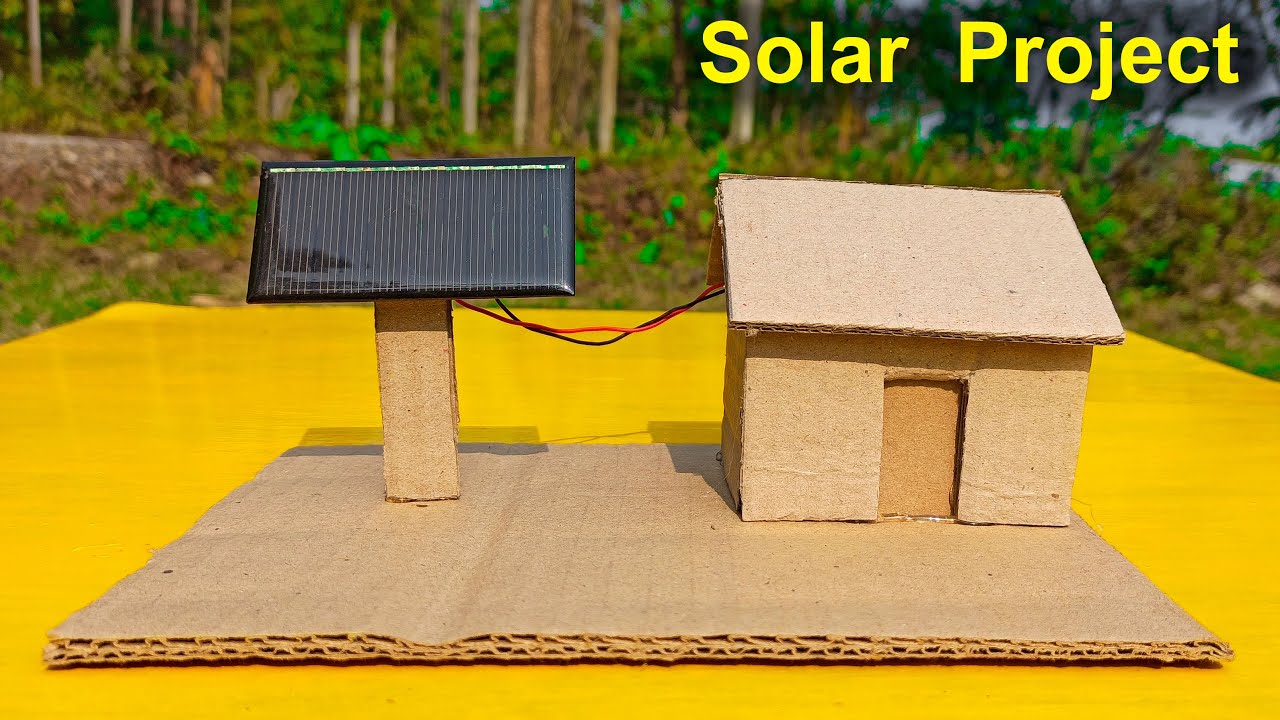
- Miniature Solar House: This project teaches kids about energy efficiency and sustainable living. It involves building a small house with solar panels and other energy-saving features.
- Solar-Powered Battery Charger: This project demonstrates how solar energy can be used to charge batteries. It involves connecting a solar panel to a battery charger and using it to charge small electronic devices.
- Solar Still: This project illustrates how solar energy can be used to purify water. It is particularly useful for arid areas that lack clean drinking water.
- DIY Solar Panel: A more advanced project where older kids and teens can assemble their own small solar panels, learning about the components and the manufacturing process.
- Solar Powered Night Light: Combine the solar panel with a rechargeable battery and a LED to create a night light that charges during the day and lights up automatically at night.
This list provides a starting point for exploring the world of educational solar projects. With a little creativity and experimentation, you can adapt these projects to suit your child's interests and skill level.
Question and Answer
Here are some frequently asked questions about educational solar projects for kids:
Q: What are the benefits of educational solar projects for kids?
A: Educational solar projects provide hands-on learning experiences that foster a deeper understanding of science, technology, engineering, and mathematics (STEM) concepts. They also promote critical thinking, problem-solving, and creativity, while inspiring a sense of environmental responsibility.
Q: What age groups are educational solar projects suitable for?
A: Educational solar projects can be adapted for various age groups, from elementary school students to teenagers. It's important to choose projects that are appropriate for the child's skill level and interests.
Q: What materials are needed for educational solar projects?
A: The materials needed will vary depending on the project, but common materials include solar panels, wires, electric motors, cardboard boxes, aluminum foil, and plastic wrap. Many of these materials can be found around the house or purchased at your local hardware store.
Q: Where can I find instructions for educational solar projects?
A: There are countless resources available online, including step-by-step instructions, videos, and tutorials. You can also find books and kits that provide everything you need to get started. Look for reputable sources that provide clear and accurate instructions.
Conclusion of Educational Solar Projects for Kids
By engaging in educational solar projects, kids gain not only knowledge about renewable energy but also valuable skills that will benefit them throughout their lives. They learn to think critically, solve problems creatively, and persevere through challenges. These projects instill a sense of environmental responsibility and empower them to become active participants in creating a sustainable future. So, gather your materials, unleash your creativity, and embark on an exciting journey of discovery with your kids. Together, you can harness the power of the sun and inspire a brighter tomorrow!