
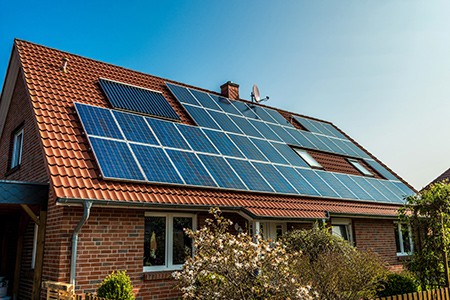
Ever wondered how many of those sleek, sun-catching rectangles you'd need on your roof to kiss your electric bill goodbye? You're not alone! Many homeowners are curious about harnessing the power of the sun, but figuring out the specifics can feel a little daunting.
One of the biggest challenges people face when considering solar panels is navigating the complex web of information available. It’s easy to get lost in technical jargon, conflicting advice, and varying cost estimates. Sorting through all of that to understand what’s actually needed foryourhome can be frustrating, to say the least.
Generally speaking, the number of solar panels needed to power a house depends on a few key factors: your average energy consumption (kilowatt-hours or k Wh), the amount of sunlight your location receives, and the wattage of the solar panels themselves. A typical home in the US might need anywhere from 20 to 40 solar panels, but it's best to get a professional assessment for a truly accurate estimate tailored to your specific needs.
So, determining the right number of solar panels involves considering your energy usage, geographical location, and the panel's power output. Getting a professional evaluation is key to ensuring you invest in a system that truly meets your energy needs and maximizes your savings. By carefully weighing these factors, you can unlock the benefits of solar power and contribute to a more sustainable future.
Figuring Out How Many Solar Panels
My cousin, Sarah, lives in sunny Arizona and she was one of the first people I knew who made the leap to solar. I remember visiting her a few years back, shortly after the installation. She was absolutely beaming, not just because of the savings, but also because of the feeling of independence and environmental responsibility. She showed me the monitoring system that tracked their energy production, and I was fascinated. I vividly recall asking her a million questions about the process, the cost, and, of course, how many panels they needed. She had a larger home and a family of five, so their electricity usage was quite high. They ended up needing around 35 panels to cover most of their needs. I was impressed! The biggest surprise was her electric bill, it was practically non-existent! The only expense they paid was the connection charge which was less than $20 a month. I think seeing Sarah’s success firsthand really demystified the whole process for me. It went from being this abstract idea to a tangible possibility that I could envision for my own home one day. It also gave me a healthy respect for the initial research and careful planning that goes into making sure you get the right system for your specific circumstances.
What is How Many Solar Panels to Run a House?
Understanding "How Many Solar Panels to Run a House?" is about more than just counting rectangles on a roof. It's a complex equation involving several variables that all contribute to a final answer specific toyoursituation. At its core, it's about matching your energy consumption with energy production. You need to generate enough electricity from sunlight to cover your daily needs, whether it's running the air conditioner, powering your appliances, or charging your devices. Several elements determine the outcome, including the amount of electricity your household consumes (measured in kilowatt-hours), the amount of sunlight your location receives (affected by latitude, weather patterns, and even shade from trees), and the efficiency and wattage of the solar panels you choose.
Think of it like balancing a checkbook. On one side, you have your expenses: your monthly electricity bills, representing the energy you use. On the other side, you have your income: the electricity generated by your solar panels. The goal is to have your solar income meet or exceed your energy expenses, effectively offsetting your reliance on the traditional power grid. The beauty of solar is that it's a long-term investment that pays off over time, reducing your carbon footprint and providing a degree of energy independence.
This also encompasses grid-tied versus off-grid systems. Grid-tied systems are connected to the traditional power grid, so any excess energy you generate can be sent back to the grid, often earning you credits on your bill. Off-grid systems, on the other hand, are entirely independent and require battery storage to provide power when the sun isn't shining. Understanding these different system types is crucial in determining the optimal number of solar panels for your specific needs and goals.
History & Myth of How Many Solar Panels to Run a House?
The concept of harnessing solar energy isn’t new; it dates back centuries. Ancient civilizations used sunlight to heat homes and even create fire. But the "modern" solar panel, as we know it, has its roots in the 19th century with the discovery of the photovoltaic effect. Early experiments were fascinating but lacked the efficiency and affordability for widespread use. It wasn't until the mid-20th century, with the space race and the need for reliable power sources in satellites, that solar technology really began to develop. These early solar panels were incredibly expensive, but they paved the way for advancements in materials and manufacturing processes that eventually made solar energy more accessible.
One common myth surrounding solar panels is that they only work in sunny climates. While it's true that areas with more sunlight will generally produce more electricity, solar panels still generate power on cloudy days. The efficiency might be reduced, but they're still capturing light and converting it into energy. Another myth is that solar panels are incredibly fragile and require constant maintenance. Modern solar panels are designed to be durable and withstand harsh weather conditions, and require very little maintenance, typically just an occasional cleaning to remove dirt and debris.
Finally, another misconception is that installing solar panels is a complicated and disruptive process. While it does require professional installation, the process has become much more streamlined and efficient over the years. A typical installation can be completed in a few days, and most homeowners find the benefits far outweigh any temporary inconvenience. The myth of complexity often stems from a lack of understanding of the process and the technology involved.
Hidden Secrets of How Many Solar Panels to Run a House?
Beyond the basics of energy consumption and sunlight availability, there are some lesser-known factors that influence the ideal number of solar panels for your home. One "secret" is the impact of shading. Even small amounts of shade can significantly reduce the output of a solar panel system. Trees, buildings, or even utility poles can cast shadows that affect performance. A solar installer will typically conduct a shading analysis to identify potential problem areas and design the system accordingly. Sometimes, this means strategically placing panels to avoid shaded areas, or using microinverters or power optimizers to maximize the output of each individual panel.
Another hidden secret is the angle and orientation of your roof. The optimal angle for solar panels varies depending on your latitude. In general, panels should be angled towards the south to maximize sunlight exposure throughout the year. However, even a slight deviation from the optimal angle can impact energy production. Similarly, the orientation of your roof can affect the amount of sunlight the panels receive. A south-facing roof is ideal, but east- or west-facing roofs can still be viable options, although they may require more panels to achieve the same level of energy production.
Finally, the efficiency of your appliances plays a role. Upgrading to energy-efficient appliances can significantly reduce your overall energy consumption, which in turn can reduce the number of solar panels you need. Replacing older, less efficient refrigerators, washing machines, or air conditioners with newer, energy-saving models can make a noticeable difference in your electricity bills and the size of the solar panel system required.
Recommendations for How Many Solar Panels to Run a House?
First, get a professional energy audit. Many utility companies offer free or low-cost energy audits that can help you identify areas where you can reduce your energy consumption. This is a crucial first step, as it will give you a clearer understanding of your actual energy needs. The audit will assess factors such as insulation levels, air leaks, and appliance efficiency, and provide recommendations for improvements.
Second, research different solar panel options. Solar panels vary in terms of wattage, efficiency, and cost. It's important to compare different brands and models to find the best fit for your needs and budget. Look for panels with high efficiency ratings and long warranty periods. Consider the reputation and reliability of the manufacturer, as well as the availability of local service and support.
Third, get multiple quotes from different solar installers. Don't settle for the first quote you receive. Get at least three different quotes to compare prices, system designs, and installation services. Be sure to ask about any hidden fees or charges, and make sure the installer is licensed and insured. Check online reviews and ask for references to get a sense of the installer's reputation and quality of work. A reputable installer will be able to answer all of your questions and provide a detailed proposal that outlines all aspects of the project.
How Many Solar Panels to Run a House? Insights
Diving deeper into the "how many" question, let's consider the concept of net metering. Net metering is a policy that allows homeowners with solar panels to receive credit on their electricity bills for any excess energy they send back to the grid. This is a significant benefit, as it effectively allows you to "store" excess energy during sunny days and use it later when you need it. The rules and regulations for net metering vary by state and utility company, so it's important to understand how it works in your area. Some utilities offer full retail credit for excess energy, while others offer a wholesale rate.
Net metering can significantly impact the number of solar panels you need. If you live in an area with favorable net metering policies, you may be able to install a slightly smaller system than you would otherwise need, knowing that you can offset your energy consumption with credits from the grid. On the other hand, if you live in an area with less favorable net metering policies, you may need to install a larger system to ensure you generate enough energy to cover your needs without relying heavily on the grid.
Ultimately, the optimal number of solar panels is a balancing act between your energy consumption, sunlight availability, panel efficiency, and net metering policies. A professional solar installer can help you navigate these complexities and design a system that maximizes your savings and minimizes your reliance on traditional energy sources. Understanding the role of net metering is key to making informed decisions about your solar panel investment.
Tips for How Many Solar Panels to Run a House?
One key tip is to start with an energy audit. Before you even begin thinking about solar panels, understand how much energy you're currently using. An energy audit will pinpoint areas where you're wasting energy, allowing you to make improvements that can reduce your overall consumption. This will not only lower your electricity bills but also potentially reduce the number of solar panels you need.
Another important tip is to consider your future energy needs. Are you planning to add an electric vehicle or install a swimming pool? These additions will increase your energy consumption, so you'll need to factor that into your solar panel calculations. It's better to overestimate your needs slightly than to underestimate them and find yourself short on power in the future.
Finally, don't be afraid to ask questions. Solar panel technology can be complex, so it's important to understand all aspects of the system before you make a decision. Ask your solar installer about panel efficiency, warranty periods, and net metering policies. A reputable installer will be happy to answer your questions and provide you with all the information you need to make an informed choice. Remember, this is a significant investment, so it's worth taking the time to do your research and get it right.
Expert Tips on How Many Solar Panels to Run a House?
Let's delve deeper into panel orientation and tilt. Solar panels generate the most electricity when they are directly facing the sun. The optimal orientation for solar panels in the Northern Hemisphere is typically south-facing, as this maximizes sunlight exposure throughout the day. However, the ideal tilt angle depends on your latitude. The tilt angle is the angle at which the panels are mounted relative to the horizontal. In general, the tilt angle should be roughly equal to your latitude. For example, if you live at 40 degrees latitude, the optimal tilt angle for your solar panels would be around 40 degrees.
However, there are some nuances to this rule. If you want to maximize energy production during the summer months, you can reduce the tilt angle slightly. Conversely, if you want to maximize energy production during the winter months, you can increase the tilt angle slightly. Some solar panel installers offer adjustable mounting systems that allow you to change the tilt angle of your panels seasonally. This can be a good option if you want to optimize energy production year-round.
It's also worth noting that even if your roof isn't perfectly south-facing, you can still install solar panels. East- or west-facing roofs can still generate a significant amount of electricity, although they may not be as efficient as south-facing roofs. A solar installer can assess your roof and determine the best orientation and tilt angle for your solar panels to maximize energy production. The key is to work with a qualified professional who can take all of these factors into account and design a system that meets your specific needs.
Fun Facts About How Many Solar Panels to Run a House?
Did you know that the first solar panels were incredibly inefficient? Early solar cells converted only a tiny fraction of sunlight into electricity. Today's solar panels are much more efficient, with some models exceeding 20% efficiency. This means that they can convert more than one-fifth of the sunlight that hits them into usable electricity.
Here's another fun fact: Solar panels can actually work in space! In fact, they were first developed for use in satellites. The harsh conditions of space, including extreme temperatures and constant sunlight, make solar panels an ideal power source for spacecraft. Many satellites and space stations rely on solar panels to generate electricity.
And finally, did you know that the largest solar power plant in the world is located in China? The Tengger Desert Solar Park covers an area of over 1,200 acres and has a capacity of over 1,500 megawatts. That's enough electricity to power millions of homes!
How to Use/Apply How Many Solar Panels to Run a House?
The first step is assessing your energy needs. Review your electricity bills from the past year to determine your average monthly energy consumption in kilowatt-hours (k Wh). This will give you a baseline for understanding how much energy you need to generate with solar panels. Pay attention to seasonal variations in your energy consumption, as this will help you design a system that meets your needs year-round.
The second step is evaluating your home's suitability for solar panels. Consider the orientation and tilt of your roof, as well as any shading from trees or buildings. A south-facing roof with minimal shading is ideal, but other orientations can still work. Consult with a solar installer to assess your roof's suitability and determine the best placement for your solar panels.
The third step is calculating the number of solar panels you need. This calculation involves several factors, including your energy consumption, the amount of sunlight your location receives, and the wattage of the solar panels you choose. A solar installer can help you with this calculation, taking into account all of the relevant factors to design a system that meets your specific needs. Once you have determined the number of solar panels you need, you can begin the process of choosing panels and getting installation quotes.
What If Scenarios Related to How Many Solar Panels to Run a House?
What if your energy consumption increases significantly? Perhaps you decide to add an electric vehicle or install a swimming pool. In this scenario, you would likely need to add more solar panels to your system to compensate for the increased energy demand. Alternatively, you could focus on reducing your energy consumption by upgrading to more efficient appliances or improving your home's insulation. A combination of both approaches may be the most effective solution.
What if you move to a different location? If you move to a location with more sunlight, you may be able to generate more electricity with the same number of solar panels. Conversely, if you move to a location with less sunlight, you may need to add more solar panels to maintain the same level of energy production. It's important to reassess your solar panel needs whenever you move to a new location.
What if solar panel technology improves significantly? As solar panel technology continues to advance, newer models are becoming more efficient and more affordable. If you install solar panels today, you may be able to upgrade to more efficient panels in the future, which could potentially reduce the number of panels you need. It's important to stay informed about the latest advancements in solar technology to make informed decisions about your solar panel system.
Top X Things About How Many Solar Panels to Run a House?
Here are the Top 5 Benefits of Installing the Right Number of Solar Panels:
1. Reduced Electricity Bills: The most obvious benefit is the reduction in your monthly electricity bills. By generating your own electricity with solar panels, you can significantly lower your reliance on the traditional power grid. In some cases, you may even be able to eliminate your electricity bill entirely.
2. Increased Home Value: Homes with solar panels are often more attractive to buyers, and studies have shown that they can command a higher resale price. Solar panels are seen as a valuable asset that can save homeowners money on their electricity bills for years to come.
3. Environmental Benefits: Solar energy is a clean, renewable energy source that doesn't produce greenhouse gas emissions. By installing solar panels, you can reduce your carbon footprint and contribute to a more sustainable future. It's a way to make a tangible difference in the fight against climate change.
4. Energy Independence: Solar panels give you a degree of energy independence, reducing your reliance on the traditional power grid. This can be particularly beneficial during power outages or other disruptions to the grid. You can continue to power your home even when the grid is down.
5. Government Incentives: Many governments offer incentives, such as tax credits and rebates, to encourage homeowners to install solar panels. These incentives can significantly reduce the upfront cost of solar panel installation, making it more affordable.
How Many Solar Panels to Run a House? Q&A
Q: How do I determine my energy consumption?
A: Review your electricity bills from the past year. Your average monthly energy consumption is usually listed in kilowatt-hours (k Wh).
Q: What factors affect the number of solar panels I need?
A: Your energy consumption, the amount of sunlight your location receives, and the wattage of the solar panels.
Q: Can solar panels work on cloudy days?
A: Yes, solar panels can still generate electricity on cloudy days, although at a reduced efficiency.
Q: How long do solar panels typically last?
A: Most solar panels come with a 25-year warranty, but they can often last much longer than that.
Conclusion of How Many Solar Panels to Run a House?
Determining the right number of solar panels for your home is a multifaceted process, but it's a worthwhile endeavor. By considering your energy needs, geographical location, and the efficiency of the panels, you can make an informed decision that saves you money and benefits the environment. Remember to get a professional assessment to ensure accurate calculations and maximize your solar investment. Taking control of your energy future is within reach, so start exploring the possibilities of solar power today!